Advanced RPE Calculator
Train Smarter • Lift Stronger • Calculate Precisely
RPE Calculator
Backoff Set Calculator
RPE Chart (1RM %)
| Reps | RPE 10 | RPE 9 | RPE 8 |
|---|---|---|---|
| 1 | 100% | 96% | 92% |
| 3 | 92% | 89% | 86% |
| 5 | 87% | 84% | 81% |
| 8 | 80% | 77% | 74% |
| 10 | 75% | 72% | 69% |
This training tool is designed to help lifters estimate working intensity based on real effort rather than fixed numbers. RPE Set Calculator. Instead of guessing how heavy a set should feel, it allows you to Adjust load using feedback from your own performance. Many strength athletes rely on this approach because daily performance is never the same. Recovery, fatigue, and stress all influence how much weight you can handle. By focusing on effort and remaining repetitions, training becomes more flexible, controlled, and sustainable over time. One of the biggest mistakes in strength training is treating every session the same.
Percentages may look accurate on paper, but they don’t account for how the body actually feels on a given day.
Effort-based training shifts the focus away from rigid targets and toward intelligent decisionmaking. Instead of forcing numbers, lifters learn to adjust intensity based on performance feedback. This method reduces unnecessary strain while keeping progress consistent.
In the world of strength training and exercise programming, it’s essential to monitor and manage your training intensity to optimize progress and prevent injury. Rate of Perceived Exertion (RPE) is a valuable tool that allows individuals to subjectively assess the difficulty of their workouts.
RPE Set Calculator Table
The table acts as a reference that links perceived effort with repetitions performed. It helps Estimate how close a set was to failure without requiring max attempts. By using this reference, lifters can fine-tune their training load during a session. It’s especially useful when managing heavy phases, where pushing too hard can compromise recovery and long-term results.
| RPE Scale | Intensity Of Physical Exercise |
| 6 | No exertion at all (resting) |
| 7-8 | Extremely light exertion (barely noticeable) |
| 9-10 | Very light exertion (minimal effort) |
| 11-12 | Light exertion (easy effort) |
| 13-14 | Somewhat hard exertion (moderate effort) |
| 15-16 | Hard exertion (challenging effort) |
| 17-18 | Very hard exertion (very challenging effort) |
| 19-20 | Maximum exertion (maximum effort) |
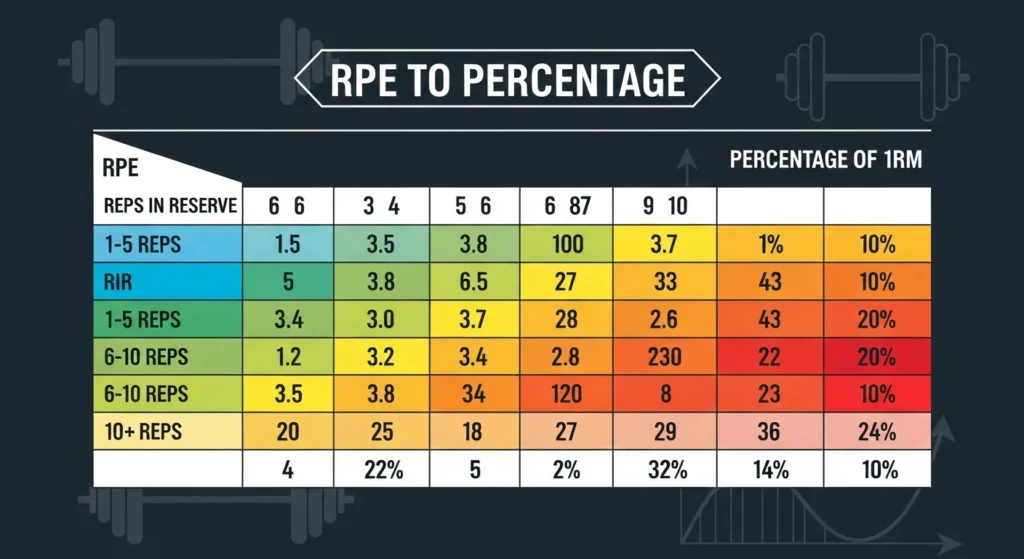
RPE to Percentage
Effort ratings can also be translated into approximate loading ranges. This allows lifters to combine autoregulation with traditional percentage-based planning. Rather than relying on strict formulas, this conversion provides a flexible guideline. It helps maintain productive intensity while adapting to daily performance variations.
How an RPE Set Calculator Tool Works
The system uses two simple inputs: repetitions completed and perceived effort. From these, it estimates how much capacity was left in the set and suggests appropriate load adjustments. This mirrors how experienced coaches evaluate training in real time. Instead of chasing numbers, the focus stays on quality, consistency, and sustainable progress.
Practical Steps to Use an RPE Set Calculator Tool
Start by completing a set with controlled form. Afterward, assess how many repetitions you could still perform without breakdown. Honesty at this stage is key to accurate results. Enter the values, review the output, and apply adjustments to your next set or session. Over time, this approach improves training awareness and leads to better load selection without unnecessary fatigue.
Some Additional Points to Consider When Using an RPE Set Calculator
Effort-based training works best when it’s applied with awareness rather than blindly followed. While calculators and tables provide guidance, real progress comes from understanding how different factors influence performance on any given day. These points help ensure smarter decisions and more reliable results over time.
Consider Fitness Level
Perceived effort changes as training experience increases. What feels challenging for a beginner may feel manageable for an experienced lifter. Early on, effort ratings can feel inconsistent because the body is still learning movement patterns and fatigue signals. As experience grows, effort awareness improves. This is why newer athletes should treat early estimates as learning tools rather than absolute measures, allowing accuracy to develop gradually.
RPE and Heart Rate
Effort perception and heart rate often align, but they don’t always tell the same story. Strength training can feel extremely demanding without causing a large spike in heart rate, while conditioning work may elevate heart rate quickly with less muscular fatigue. Using both indicators together provides a clearer picture. Heart rate reflects cardiovascular stress, while perceived effort captures muscular and neural fatigue. Understanding the difference helps avoid misjudging intensity.
Use Across Different Activities
Effort-based assessment isn’t limited to barbell lifts. It can be applied to bodyweight training, conditioning work, endurance sessions, and even skill-based activities. The key is consistency. Effort should always be judged relative to the specific activity being performed. Comparing across movements doesn’t require identical sensations—only honest evaluation within that context.
Track Progression
Progress isn’t always about lifting heavier weights. Sometimes it shows up as improved control, better recovery, or performing the same workload with lower perceived strain. Tracking effort alongside volume and load reveals trends that numbers alone miss. Over time, this data highlights improvements in efficiency and resilience rather than just raw strength.
Listen to Your Body
No calculator can fully account for poor sleep, stress, soreness, or illness.These factors directly influence performance and effort perception. When effort feels unusually high for normal workloads, it’s often a signal to adjust rather than push through. Responding to these signals helps prevent setbacks and supports long-term consistency.
Seek Professional Guidance
Effort-based systems are powerful, but proper interpretation matters. Coaches and trained professionals provide context, feedback, and correction that toolalone cannot. Guidance is especially valuable during advanced training phases or when progress stalls. An experienced perspective helps refine effort judgment and prevent misapplication.
Combine with Other Training Metrics
Effort works best when paired with additional data. Load, volume, rest periods, recovery quality, and session frequency all contribute to overall training stress. When these metrics are viewed together, patterns become clearer. This integrated approach leads to better decisions, more stable progress, and fewer unnecessary adjustments.
The Benefits of RPE-Based Training
Effort-based training removes much of the guesswork from lifting. Instead of forcing numbers on days when the body isn’t ready, it allows intensity to adjust naturally based on real performance. This flexibility helps lifters train consistently without unnecessary strain. One of the biggest advantages is fatigue management. Because effort is monitored, training volume and intensity stay within productive limits. This reduces burnout and lowers the risk of overuse injuries, especially during long training blocks. Another key benefit is awareness. Over time,lifters develop a stronger understanding of their own limits, recovery patterns, and capacity. This leads to better decision-making, improved technique under load, and more sustainable progress.
Frequently Asked Questions
Conclusion
Effort-based training offers a practical alternative to rigid programming by aligning intensity with real-time performance. Instead of chasing fixed numbers, it encourages smarter decisions that reflect recovery, readiness, and long-term goals. When applied consistently, this approach improves awareness, reduces unnecessary fatigue, and supports steady progress. By combining honest effort assessment with thoughtful planning, training becomes both more effective and more sustainable over time.